Notes from the author: I want you to understand what is asked of a SOC analyst and what they do and how they do it.**
*I hope this article can aid you in not just becoming one but a great one.*
What is the Role of a SOC Analyst in Cybersecurity?
In today’s digital landscape, cybersecurity has emerged as a paramount concern for organizations worldwide. Security Operations Center (SOC) Analysts play a pivotal role in this domain, dedicated to monitoring and safeguarding an organization’s IT infrastructure, networks, and data. Working within a Security Operations Center, these analysts address security issues at both organizational and technical levels, actively identifying, analyzing, and responding to security incidents to ensure the prompt detection and mitigation of potential threats, thereby maintaining the integrity and confidentiality of sensitive data.
Vigilance is not merely a creed but a responsibility for Security Operations Center Analysts, whose primary goal is adept identification using tools to monitor networks, systems, and applications. Any signs of unusual activity or potential security breaches serve as a call to arms, prompting analysts to delve deep and mitigate or halt such occurrences altogether. This task is facilitated by leveraging tools with scrutiny and a comprehensive understanding of cybersecurity and information technology fundamentals.
Upon identifying a threat, SOC analysts embark on an investigative journey, utilizing tools tailored to the situation to uncover threat vectors and piece together a timeline and scope of the incident. This forensic examination provides valuable insights, allowing for the implementation of enhanced defenses against future attacks.
Once an incident requiring a response is identified, SOC analysts pivot to deliver decisive action, formulating strategies to contain, mitigate damage, and neutralize the threat. Whether it involves isolating compromised systems, blocking malicious IP addresses, or deploying patches and updates, precision execution is paramount in this battle, where swiftness is crucial for effective damage mitigation.
Preserving organizational integrity and confidentiality is paramount for SOC analysts. Through promptly detecting and mitigating potential threats, they safeguard sensitive data from malicious actors. This is achieved by much of the following:
*It should be noted that this is not every single thing a SOC analyst does but it will allow anyone to understand what they do.*
The Core Responsibilities of a SOC Analyst
SOC analysts utilize a variety of security tools and technologies, such as Security Information and Event Management (SIEM) systems, intrusion detection systems (IDS), and firewalls, to uphold the organization’s security posture. By analyzing security alerts and recognizing patterns of suspicious activity, they leverage their expertise to assess the severity and potential impact of security incidents. Staying updated on the latest cybersecurity threats and trends, SOC analysts contribute to both proactive and reactive defense strategies of their organization.
Some things you will be asked to do as a SOC analyst: Monitoring and Detection: Continuously monitoring network traffic and system logs to detect security threats.
Incident Response: Quickly responding to security incidents, conducting thorough investigations, and implementing effective solutions.
Compliance: Ensuring that the organization’s security measures comply with relevant regulations and standards.
Documentation: Assisting with building, auditing, and documenting secure IT infrastructures.
SOC analysts must possess strong analytical and problem-solving skills, enabling them to investigate incidents thoroughly and recommend effective solutions. They also need a comprehensive understanding of networking concepts, operating systems, and cybersecurity principles. Proficiency with security tools and technologies such as firewalls, SIEM, IDS/IPS, and antivirus software is essential. Awareness of common cyber threats, attack vectors, and mitigation strategies further enhances their ability to protect the organization.
Technical skills developed and tools used while being SOC analyst include:
Networking and Protocols: Excellent knowledge of TCP/IP, UDP, DNS, FTP, SSH, SSL/TLS, and HTTP protocols.
Security Solutions: In-depth understanding of technical security solutions like firewalls, SIEM, NIDS/NIPS/HIDS/HIPS, AVs, DLP, and proxies.
Threat Analysis: Ability to analyze and respond to undisclosed software and hardware vulnerabilities, and investigate, document, and report on emerging trends.
Scripting Languages: Proficiency in scripting languages, particularly Microsoft PowerShell, to automate tasks and improve efficiency.
Digital Forensics: Using such tools as Autopsy, EnCase Forensic, Sleuth Kit, Volatility, Wireshark, Splunk, Endpoint Security just to name a few.
Compliance and Regulatory Bodies
Compliance and regulatory knowledge are standards in cybersecurity being set by local, state, federal and otherwise for us to follow. Being a Security Operations Center analyst does not exempt anyone from such standards, in fact you supposed to be an expert when it comes to such things.
SOC analysts play a crucial role in ensuring that their organization’s security measures comply with various standards and frameworks. This can be called compliance and regulatory knowledge.
I will go over a few with only brief descriptions below:
FedRAMP: Federal Risk and Authorization Management Program.
NIST 800-53: National Institute of Standards and Technology’s guidelines for security controls.
ISO/IEC 27001: International standard for information security management.
GDPR, HIPAA, PCI-DSS, SOX: Compliance with regulations like the General Data Protection Regulation, Health Insurance Portability and Accountability Act, Payment Card Industry Data Security Standard, and Sarbanes-Oxley Act.
By understanding and adhering to these standards, SOC analysts help organizations maintain a strong security posture and avoid potential fines and legal issues.
Certifications
Certifications sought out by SOC analyst employers and themselves. As a SOC analyst it should be a goal to expand and test your knowledge in cybersecurity. Certifications are a topic for a whole article, but they should be on the horizon for a cybersecurity professional at the very least. While not always mandatory, certifications can significantly enhance a SOC analyst’s qualifications and credibility. Preferred certifications include:
Experience with SIEM and SOAR platforms, preferably Splunk or Google, is highly valued, along with a strong foundation in scripting languages like Microsoft PowerShell.
Cybersecurity Initiatives and Continuous Learning
SOC analysts are also key contributors to broader cybersecurity initiatives within their organizations. Their roles often involve:
Information Assurance: Ensuring that information systems are protected against unauthorized access and other threats.
Network Security: Implementing measures to secure network infrastructure and prevent data breaches.
Data Analytics and Machine Learning: Using advanced analytics and machine learning techniques to detect anomalies and predict potential security threats.
Cyber Response: Developing and executing response plans to mitigate the impact of security incidents.
Continuous learning is essential for SOC analysts to stay ahead of emerging threats and evolving technologies. Participating in training sessions, attending cybersecurity conferences, and obtaining advanced certifications are vital for maintaining their expertise.
Being a member of a Team
SOC analysts are commonly utilized in team settings as a need for them to be available to provide 24/7 coverage of a system is again common. Workload distribution is also important as this role is if you haven’t realized, extensive and can be far too cumbersome for an individual to perform.
SOC Analysts the Guardians of Cyberspace
SOC analysts are the frontline defenders of an organization’s cybersecurity framework. Their expertise in monitoring, detecting, analyzing, and responding to cybersecurity threats is indispensable in today’s digital world. By staying updated on the latest threats and continuously improving security measures, SOC analysts help organizations maintain a robust defense against cyber-attacks. Their role is not just technical but also strategic, ensuring that security policies comply with evolving regulations and standards, ultimately protecting the organization’s valuable data and infrastructure.
Youtube resource mention
A great resource on YouTube is a channel named Cyber Platter. There are extensive videos to prepare for SOC-related interviews and certifications: Cyber Platter YouTube Channel.
Even More Resources!
Join Tier 1 at LetsGoIT Patreon to gain access to the LetsGoIT Discord where you will have access to a wealth of learning materials tailored to illuminate the essentials and commonly used tools in various cybersecurity job roles. Visit LetsGoIT Patreon to join and delve into the resources available.
Firstly, if you want success as a web application security analyst, you need to stay up to date with this dynamic category of Cybersecurity. I would recommend doing this socially whenever available, and some ways to do just that are:
Becoming an OWASP (Open Web Application Security Project) member:
Attending your local OWASP chapter meeting. These meetings are sometimes held remotely.
Following some inspirational professionals with skills in web application security is extremely rewarding such as Rana Kahlil and Nahmesec has a fantastic Udemy course in bug bounty hunting and web application hacking and or Jason Haddix produces The Bug Hunter’s Methodology Live Course set this June 2024 for aspiring bug hunters.*
All three of the above mentioned as extraordinary pentesters. Rana Kahlil operates the Rana Khalil Academy that will benefit anyone using the Burpsuite proxy.
Nahmesec and Jason Haddix have discussed methodology and performed web application pen testing on YouTube for our benefit as well.
That is not to say, “disregard other ethical hacking channels.” I just find the three mentioned to be sound professionals in this space.
I am done mentioning the amazing social resources you have to allow yourself to learn and hone web application security skills; now, I want you to be aware of what this role must be cognizant of, such as understanding common vulnerabilities and exploits, security tools, and technologies, as well as having a grasp of scripting and coding languages used in building web applications. Being stronger in one of those mentioned and not the other should not deter your motivation to be a web application security analyst. In fact, it should be the fuel that allows you to propel yourself into research and certification pursuit to build that strength and be better equipped to perform well as a web app sec analyst.
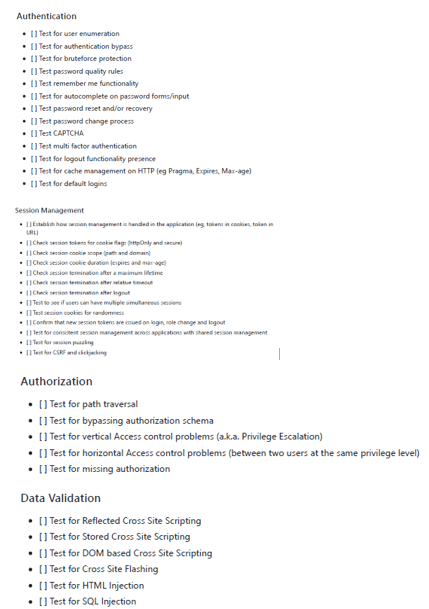
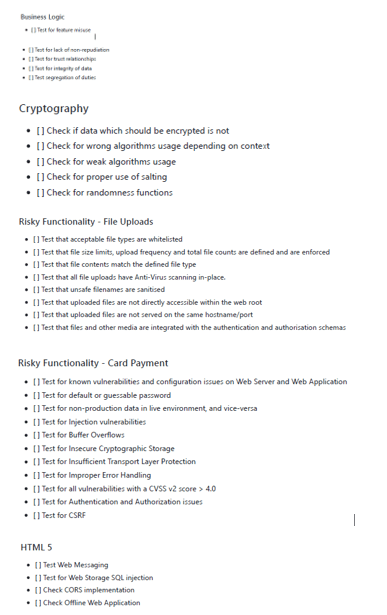
When conducting a web application security assessment for the first time, it will serve you well to combine the rudimentary with the extraordinary. Using a checklist created for bug hunters can be very beneficial to your mission. This checklist should be as extensive as possible and allow you to fall down every single hole that was dug before you through the aid of socially delivered content. You should remain curious and bold in your pursuits as you are a part of the organization’s immune system without your toil and remediation. A bad actor may become aware of an exploit and use it maliciously. I will supply you with something I came across socially, as in cybersecurity, it is in our best interest to share knowledge and be transparent. I may not be able to supply a link to this content, but I am in no way trying to pass it off as my own. With no author credited, we can only stand to reason that this is shared for the benefit of all those who would use it.
This checklist should look like the following:
This checklist was made using OWASP’s online resources. OWASP is a significant component of the arsenal of a web app security analyst and should be held in high esteem as it creates the standards and best practices for web application professionals to use to achieve compliance in many industries. OWASP has achieved this by being a community-based project that consists of international professionals, developers, and enthusiasts. OWASP aims to equip web application security analysts with a list of the top ten vulnerabilities, security tools, guidelines, and educational material. This is all powered by professionals who are motivated and passionate about security. OWASP is a vital and sacred part of being a web application security analyst, and it should be analyzed often.
Understanding OWASP is essential for your tasks in web app sec. The OWASP Top Ten is an updated list of vulnerabilities for you to examine and use while conducting audits, and it is worth mentioning that just because the OWASP Top Ten does not list a vulnerability does not make it any less important for you to experiment with in your audits. The OWASP Top Ten is a list of vulnerabilities that are perceived to be of the most risk. Not a list of all vulnerabilities that are able to be exploited.
The OWASP Top Ten Web Application list can be found at the following URL:
As a Web Security Application Analyst the need to understand web technologies such as the below are essential: HTML
CSS
JavaScript
HTTP/HTTPS
Web Servers and Databases
I will briefly explain what makes them essential for a web sec app professional.
HTML – Understanding HTML is crucial for a Web Application Security Analyst because it enables them to identify and analyze vulnerabilities like Cross-Site Scripting (XSS) and form manipulation by reviewing source code and understanding web page structures. It helps them grasp basic web functionality, client-side vulnerabilities, and how browsers render content. Knowledge of HTML is essential for creating and using effective security tools, performing manual security tests, and communicating effectively with developers to provide actionable security recommendations. Additionally, it allows analysts to contribute to building secure web applications by ensuring proper input validation and output sanitization.
CSS – Knowing CSS (Cascading Style Sheets) is essential for a Web Application Security Analyst because it helps in understanding how web pages are rendered and manipulated. This knowledge is crucial for identifying and mitigating security vulnerabilities related to the presentation layer of web applications. For example, attackers might use CSS to obscure malicious content or manipulate the appearance of elements to trick users into performing unintended actions (like clicking on a hidden link). Understanding CSS allows analysts to better detect and analyze such tactics, ensuring that they can effectively secure the entire web application.
JavaScript – Knowing JavaScript is crucial for a Web Application Security Analyst because it is a fundamental part of modern web applications, often used to enhance user experience and functionality. JavaScript can introduce security risks, such as Cross-Site Scripting (XSS) and Cross-Site Request Forgery (CSRF), which can be exploited if not properly managed. Understanding JavaScript allows analysts to identify and mitigate these vulnerabilities effectively. Additionally, knowledge of JavaScript enables analysts to understand client-side behaviors, manipulate and test scripts for vulnerabilities, and develop secure coding practices. Mastery of JavaScript is essential for performing thorough security assessments and ensuring robust application security.
HTTP/HTTPS – Understanding HTTP/HTTPS is crucial for a Web Application Security Analyst because these protocols underpin all web communications. HTTP (Hypertext Transfer Protocol) is the foundation of data exchange on the web, defining how messages are formatted and transmitted, and how web servers and browsers should respond to various commands. HTTPS (HTTP Secure) adds a layer of security by encrypting data using SSL/TLS, ensuring the confidentiality and integrity of data in transit. Knowledge of these protocols allows analysts to identify and mitigate security vulnerabilities, such as man-in-the-middle attacks, insecure data transmission, and misconfigurations in server responses. This understanding is essential for securing web applications and protecting sensitive user information.
Web Servers and Databases – Understanding web servers and databases is crucial for a Web Application Security Analyst because these components form the backbone of web applications. Knowledge of web server configurations, such as Apache or Nginx, helps in identifying and mitigating potential security misconfigurations and vulnerabilities like directory traversal and insecure headers. Similarly, understanding database management systems (DBMS) such as MySQL or PostgreSQL is essential to safeguard against SQL injection attacks, improper data handling, and unauthorized access. This knowledge allows analysts to ensure secure data storage, manage permissions, and implement robust security controls, thereby protecting the application from a wide range of security threats.
As a professional knowing the tools you will use will be another essential part of this job role some of which are:
OWASP ZAP
Burp Suite
Nessus
These are briefly gone over just below:
OWASP ZAP (Zed Attack Proxy) – is an open-source web application security scanner that helps identify vulnerabilities in web applications. It acts as a proxy server and intercepts web traffic between the browser and the web application. By doing so, it allows analysts to manually explore the application while automatically scanning for common security issues such as SQL injection, cross-site scripting (XSS), and more. OWASP ZAP is crucial for a Web Application Security Analyst as it provides comprehensive tools for testing and finding vulnerabilities in web applications.
Burp Suite – is a widely-used platform for performing security testing of web applications. It includes a variety of tools such as a proxy, scanner, intruder, and repeater, which help in identifying and exploiting vulnerabilities. Analysts use Burp Suite to intercept, modify, and analyze HTTP/HTTPS traffic between the browser and the web server. This tool is essential for manual penetration testing and automated vulnerability scanning, making it a versatile asset for detecting and addressing security weaknesses in web applications.
Nessus – is a vulnerability assessment tool that scans for vulnerabilities, misconfigurations, and compliance issues across various systems, including web applications. It is capable of identifying a wide range of security issues such as outdated software, missing patches, and configuration errors. Nessus provides detailed reports on vulnerabilities, risk ratings, and remediation suggestions. For a Web Application Security Analyst, Nessus is valuable for conducting thorough vulnerability assessments, ensuring that web applications and their underlying infrastructure are secure and compliant with security standards.
OWASP also recommends these and other tools at the following as it is essential to automate your vulnerability assessments and save valuable remediation time:
Understanding compliance, security policies, and secure development practices are all necessary for a Web Sec App Analyst. I would also be amiss if I did not speak of coding in great depth, as I will eventually. I will write another article explaining as much in due time, so stay tuned.
Great Web App Professionals listed and linked below:
As our lives become increasingly intertwined with the digital realm, fostering trust in Cybersecurity emerges as a critical imperative to safeguarding our personal, financial, and societal interests from the ever-evolving threats of the cyber world.
One of the hardest things to gain is a person’s trust, and in the world of cyberspace, trust should not be freely given. Trust is earned; even to that end, if you place all your trust in someone in one open hand, you will still be empty-handed. Deceit is rife online, and with that, we must analyze the sources we procure information through studious professionals and, even then, be conscious that they are as much a person as you and me.
So, let us be skeptical and vigilant when receiving official correspondence from institutions we interact with and those we do not. It is of great importance that we seek training to recognize what cyber-criminals do to weaponize such correspondence. Your trust should consistently be earned, and the ones teaching you these skills should be in a position recognized by the industry for their correctness.
Institutions built for the utilization of safeguarding assets are to be held to standards made by officials who have everything to lose if institutions are utilizing assets incorrectly. Cybersecurity is about more than just how we use the internet. It is a defense for how we perform functions that make our lives convenient and easier to manage.
The following institutions have newsletters to which I am subscribed and have been subscribed for several years. Some of which I hope you may be familiar with, and if you’re not, please become.
I will only supply links because every organization mentioned respectfully deserves its own article:
These resources cover various aspects of Cybersecurity, from threat intelligence to best practices. They can keep you updated and enhance your posture when interacting with networks connected to the World Wide Web.
Reporting on Cybersecurity can be of critical importance to those affected by the turmoil vulnerabilities cause. Allowing yourself to make time to read the news can be significant in discovering you are at risk of losing the monetary value of your systems and what assets they hold.
Here are a few great News sources for Cybersecurity:
First off, we must be aware that Windows versions will have different results for the same window key combinations, so be cognizant of that.
Finding the tool we need to perform our task is essential to our success, and these window key shortcuts can allow you to achieve excellence while on any user’s Windows PC.
So without further ado
Windows key combinations, also known as keyboard shortcuts, are a set of key combinations that perform various functions in the Microsoft Windows operating system. Here’s a brief summary of some commonly used Windows key combinations and their purposes:
Windows Key (🪟): Opens or closes the Start menu.
Windows Key + D: Minimizes or restores all open windows, showing the desktop.
Windows Key + E: Opens File Explorer, providing quick access to file management.
Windows Key + L: Locks the computer, requiring a password or other authentication to unlock.
Windows Key + R: Opens the Run dialog box, allowing users to quickly run commands or launch applications.
Windows Key + I: Opens the Settings menu, providing access to various system settings.
Windows Key + Tab: Activates Task View, allowing users to switch between open applications and virtual desktops.
Windows Key + Print Screen: Takes a screenshot and saves it to the Screenshots folder in the Pictures library.
Windows Key + Arrow Keys: Snaps or moves the active window to different positions on the screen.
Windows Key + Number (1-9): Opens or switches to the application pinned to the taskbar at the corresponding position.
Ctrl + Shift + Esc: Opens the Task Manager for managing running processes and applications.
Alt + Tab: Switches between open applications.
Windows Key +Shift+S: opens up the Snipping Tool and allows you to screen snip and save anything displayed.
Windows Key +V: opens up a new window that can access to the history of things you have copied and in Windows 11 gives access to gifs, emojis, and mathematical symbols.
Windows Key + X: opens the power user menu where you can access the admin tools and various settings.
Windows Key + U: opens the Ease of Access Center this allows quick access to the accessibility features.
Windows Key + (+) or (-): opens the magnifier tool.
Windows Key + Alt + R: will start or stop recording your screen.
Windows Key + S: opens the search bar.
While many Windows key combinations are consistent across different versions of the Windows operating system, there can be some variations or additional shortcuts introduced in newer versions. Here are some key combinations that may differ or have variations across Windows operating systems:
Windows 10:
Virtual Desktops: Windows Key + Ctrl + D creates a new virtual desktop, and Windows Key + Ctrl + Left/Right Arrow switches between virtual desktops.
Cortana: Windows Key + S activates Cortana for voice commands and searches.
Windows 11:
Centered Start Menu: The Start menu has a centered design in Windows 11, but the key to open it remains Windows Key.
Snap Layouts and Snap Groups: Windows 11 introduces new features for organizing and snapping windows, accessed through the Snap Assist feature with the Windows Key + Z.
These key combinations enhance productivity, streamline navigation, and provide quick access to various features in the Windows operating system. Users can customize or explore additional key combinations based on their preferences and workflow.
Print this off, especially if you only have one mouse or cursor input, so if it fails, you can still use your PC to its fullest without unnecessary added time trying to navigate with your keyboard.
This is going to be brief as the sheer amount of training to become a cyber security specialist is overwhelming and can be filled with deceptive language that will promise a career in a specialized field filled with specialists. They commonly have over 10 to 20 years of experience through the military, where a person can be asked to apply cyber security skills daily. This field also has aspiring CTOs & CISOs from Fortune 500 companies that want to play a more supervisory/managerial role in cyber security. Training can benefit them faster than it can an average person with no technology work experience, but that is not to say with the right amount of time and discipline, one cannot succeed in cyber security without a military background or an officer boardroom position in IT or related field with the right amount of time.
With the right amount of time being in of itself a huge obstacle, if surmounted one can better be enabled to learn standardized practices. That enables a business or person to be excellent in the applied utilities of cybersecurity.
Here’s a brief list of industry-standard teaching resources available to the public:
The above can serve to enhance and build upon a foundation of understanding Cyber Security.
There are a lot of places online that discuss at a professional level how cybersecurity methods are implemented every day. Still, without the ideal foundational training to go along with standard teaching resources, you can be missing and wasting that “right amount of time” you will need to learn any worthwhile concept.
Here are two great examples of professionally developed resources, that take a more tactile approach to teaching (in the sense your keyboard will be used at a greater rate).
A cybersecurity expert must be aware that there are a lot of cybersecurity experts, and these cybersecurity experts are more than willing to teach for a price. The resources I have mentioned are justifiable in the prices they set for the learning objectives they make you meet. Institutions of learning are becoming more “wise” to develop curricula that are attractive for anyone aspiring to be a cybersecurity specialist; these curriculums may not encompass every single thing a cybersecurity professional needs to know, as the traditional amount of credit hours may not be sufficient to provide these numerous skills that need to be developed or meet a standard. It is a daunting task, and that is why there are so many resources available for someone who wants to pursue this industry.
There should always be a few questions that need to be answered before taking a course. You believe can enhance your foundational knowledge of cybersecurity and information technology.
These questions are:
What reputation does this resource possess?
Does a cybersecurity professional deliver this training?
Is this the specialized training I need to perform my desired job?
Is the training resource updated to reflect the latest cybersecurity developments?
Is there a cost, and is it justifiable in perpetuity?
You must develop your own questions so you can get the most out of these courses, resources, and institutions. You must answer them before you agree to or participate in any training. Many people are blinded by the perceived success of the future through unvalidated training resources and institutions. That may or may not allow a person to be attractive to an employer or have the correct deliverables when they are complete with their training.
Cyber security encompasses many avenues of approach for information technology in general, so if a resource is promising that you will become a cyber security professional through their course, it is a bold and hard-to-achieve objective. Still, with the right mentorship, challenges, and amount of time, you can have the same skills a cyber security practitioner uses every day, making yourself situationally aware while using the internet. Allow yourself to practice clean cyber hygiene and develop safeguarded hardware and software practices that are not only shareable and teachable but also provide safety. To those around you, and has the possibility to allow yourself a more attractive opportunity in the job market.
I would like to include for those with inquisitive minds that https://academy.hackthebox.com/ has an excellent learning module named Learning Process that provides great insight into the vastness of cybersecurity information and how to ingest that information meaningfully.
I expressed to my professor a couple of months ago that Red team efforts are attractive, so I have yet to look too much into efficient Blue team technical measures. He said, “Anyone can hack something given enough time,” this immediately reset how I viewed the matter, and I was hard-pressed into a challenging endeavor of preventing educated malicious actors.
so I wanted to share the following:
Understanding Blue Team Hackers- The Unsung Heroes
In the dynamic world of cybersecurity, the focus is often on the offensive, the Red Team, seeking vulnerabilities and breaching systems. However, the lesser-known champions, the Blue Team, play an equally critical role in safeguarding digital landscapes.
Blue Team hackers are the defenders, the guardians of networks and data. They work tirelessly to fortify systems, constantly analyzing, monitoring, and preempting potential threats. Their arsenal includes various tools and techniques to prevent, detect, and respond to cyber-attacks.
Their responsibilities encompass configuring firewalls, setting up intrusion detection systems, implementing robust security protocols, and swiftly neutralizing breaches. They meticulously study attack patterns, leverage threat intelligence, and collaborate with their peers to enhance the security posture of their organizations.
What distinguishes Blue Team hackers is their proactive stance. They don’t just react to incidents; they anticipate and prepare for potential threats. Their commitment to staying updated on the latest trends in cybersecurity is unwavering, ensuring they are equipped to counter the evolving tactics of malicious actors.
Despite the spotlight often shining on their Red Team counterparts, the significance of the Blue Team in maintaining the integrity and safety of digital infrastructures cannot be overstated. Their silent vigilance and dedication are the unsung heroes of the cybersecurity realm, working diligently to keep systems secure in an increasingly complex and challenging digital landscape.
I thought this could help those who thought such as I did. That Red team was the end all be all, the only thing to work towards for success. Oh, how wrong and naive I was.
*one of our seasoned IT experts (JD MC) share how their journey started*
For me, I think back to my days as a young boy in an English classroom where my teacher at the time spoke to all those in his care just like an adult, which allowed me the benefit of breaking away from the thought of being a child albeit only for this class period. Since this English class was at the end of the school day, the teacher was naturally drained after dealing with their work day and after providing my class with schoolwork to complete. This class also gave us time to peruse the available books in the room, of course, only after completing said schoolwork. So I often worked diligently to obtain that free time to have access to those very much ancient reading materials.
One of which was an anthology named R Is For Rockets by American author Ray Bradbury. This book housed much of my interest for the school year, and I would read it every time I had a chance. It illustrated concepts of our future world and technology, which I only gave little thought about outside of computer class during my school years. The idea that technology could provide us with anything other than a frustratingly slow experience connecting to the web was new to me.
This imaginative book and author allowed my mind to see into the world of the future, whether that was time machines or acts of heroism carried out by a modern man to save a damsel in distress in an unknown world. I channeled this interest into building a knowledge base foreign to most around me in my simple beginnings. At the time in a very underdeveloped town in rural Oklahoma. Nonetheless, I sought out the understanding of what tech means in our modern world and began to allow myself to serve those in my community with ever-changing and challenging tasks in that same vein.
I could go on and on with little care about how it started, but I am reminded that this post will be read by people who may have similar stories to mine. This book, R Is For Rockets, was the catalyst that began my pursuit to understand and gain the required knowledge of tech that has contributed to countless enjoyments in my life. So if you ever think of throwing out an old book, remember that it can still hold the ability to inspire and capture minds of those around us consider donating or giving it away.
Real life cyber crimes happen on a daily basis. This isn’t a post that is tailored to scare individuals or companies from having a presence on the web. It has the intention to educate, those of us who are uninformed when it comes to Cybersecurity.
Whether or not you know the difference between Black Hats and White Hats or hackers and crackers. You must understand you cannot underestimate the knowledge a person holds going off of what, they title themselves as.
The ability to cause mayhem through theft and shutting down web applications may not have a big enough barrier to entry for those who find it valuable and not of consequence.
The absolute amount of boot camps and instructional videos granted to the population at large is staggering. The nature of these two resources enables those with no background or academic history. To learn malicious skills which would traditionally be taught through higher education for combating against them. This is not to say that all persons who seek out a bootcamp or use Instructional videos in Cybersecurity are of bad character but it is to say the ability to weaponize these resources for personal gain is troubling.
We have seen through public fear or being overcautious of the unknown, cause incorrect circumstances befall on those that would have otherwise gone about their day as usual. One case comes to mind that made national headlines in September 2015 where a young boy was arrested for being in possession of a disassembled digital clock, the link is below if you are interested in the full story. This fear of the unknown only requires knowledge to combat against.
Fear is also a tool which can be wielded by bad actors or hackers, that also can be found with a short search. How to effectively produce whatever the bad actor aims for. This is also another reason why knowledge of these sophisticated manipulations can be important to combat against bad actors.
Cybersecurity is not only through the web, the pursuit to steal information can be conducted offline. Use of physical means to break into a system is a cybercrime. The selling or procurement of illegal items through the web is also a cybercrime. The reality of combating against bad actors with cybersecurity is knowledge.
















 LetsGoIT